Nintendo Switch App
- 3.8
- Rating
- 10.00M
- Installs
- Free
- Price
 Analysis by App-foxy
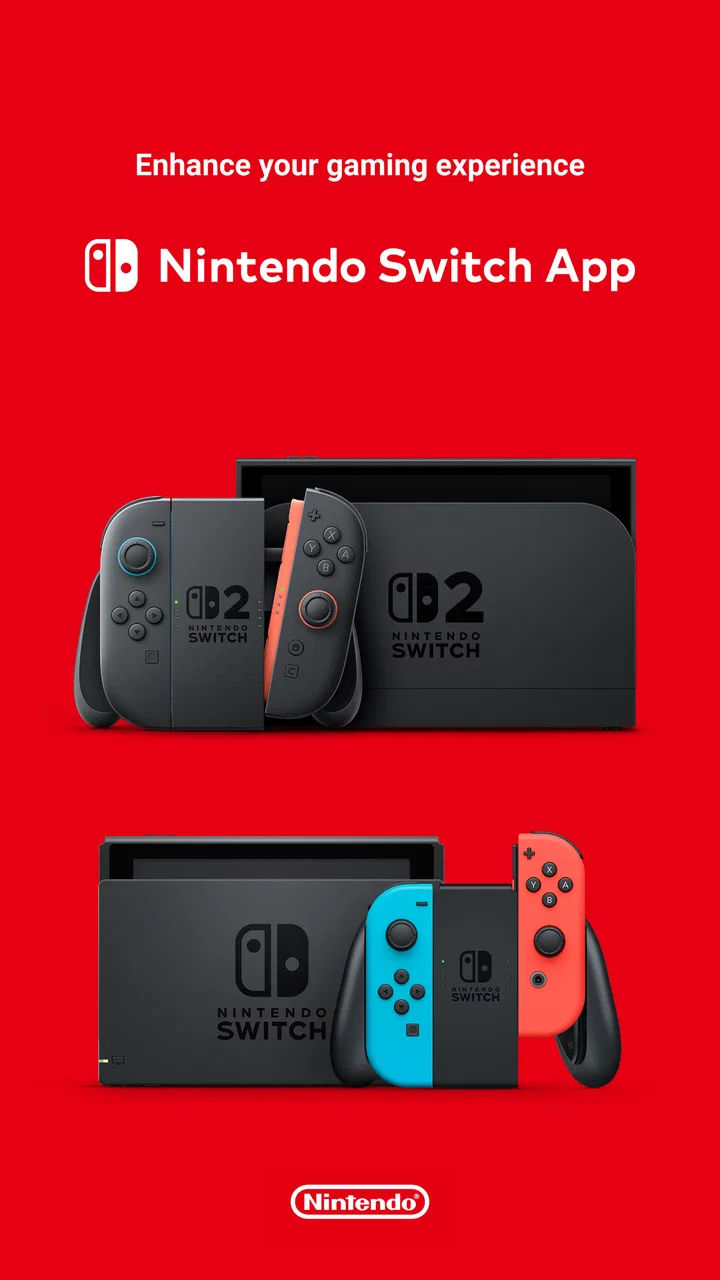
I installed Nintendo Switch App expecting a small companion for my console rather than a full entertainment platform, and that is the right way to approach it. This free entertainment app from Nintendo Co., Ltd. is built around the idea of enhancing the Nintendo Switch experience, with the console remaining the main place where games are played. On my phone, its value depends less on how much time I spend browsing and more on whether it helps me move smoothly between deciding what to play, checking related information, and getting back to the console.
That distinction matters because the app is not a replacement for the Nintendo Switch itself. It is a second-screen companion, and its usefulness appears in the gaps around a gaming session: before I pick up the Joy-Con, while I am arranging a session with friends, or after I have finished playing and want to stay connected to the wider Nintendo experience. If you want a standalone mobile game or a broad streaming service, this is the wrong download. If you already use a Switch and want a phone-based extension of that hobby, it makes considerably more sense.
From deciding what to play to getting back to the console
I find the app most useful when I treat it as the start of a gaming session, not as a destination in its own right. In this section, I’ll look at how a quick phone check can help me choose what to do and make the move to the console feel more intentional. That practical rhythm also sets up a closer look at what happens when a session gets busy.
You May Also Like

 Blood Strike: 2.5 Anniversary
Blood Strike’s Loadouts Turn Every Drop Into a Tactical Gamble
A close look at Blood Strike’s custom loadouts: how fast access to signature weapons reshapes its battle royale rhythm, rewards preparation, and narrows the gap between fights.

 Pandora - Music & Podcasts
Pandora’s Music Is Easy to Start, but Harder to Recover
Pandora’s strength is its low-effort path from a seed to a station. Its weak spot is how much confidence it asks you to place in connection, setup, and quiet recovery.

 8 Ball Pool
 Is Built on Rivalries, Rematches, and Routine
A close look at the rivalries, rematches, shared routines, and unanswered safety questions that turn a quick pool match into a persistent mobile community.

 Samsung Music
’s Quiet Strength Is Playing What You Already Own
Its reach comes less from spectacle than from dependable access to a personal library. That simplicity is both the app’s strongest retention engine and its ceiling.

 AccuWeather: Weather Radar
AccuWeather Review: A Quick, Clear Forecast for Everyday Decisions
For everyday plans, the best forecast is the one you can understand quickly. AccuWeather makes rain timing, radar, and local conditions easy to act on, with a few trade-offs.

 Hill Climb Racing
Why Hill Climb Racing Still Turns Crashes Into One More Run
A tiny car, a bumpy hill and one more upgrade: Hill Climb Racing keeps resurfacing because its simple chaos makes every near-miss feel personal.
More From Our News Desk
View All News


Starting with a simple need
My most realistic use case begins with a familiar situation: I have a short break, I know I want to play something on Switch, but I do not yet know what fits the moment. Opening the app gives me a place to begin that decision away from the television. I can use the phone as a lighter planning screen, then move to the console once I have settled on a game or activity. That separation is useful when the television is being used by someone else or when I am still deciding whether I have enough time for a proper session.
The app is also more comfortable for quick checks than turning on the console just to look around. A phone is already in my hand, and that makes the first step feel less demanding. I do not have to treat every interaction as the beginning of a full gaming session. In practice, this changes the app from something I open constantly into something I reach for at specific moments.
Because it is rated for Everyone, it is easy to imagine it being used in a family setting, although the experience still depends on how each person uses a Nintendo account and console. I would not install it solely because of the age rating; I would install it because a Switch is already part of my routine. The app has a purpose when there is a console to connect the experience to.
Following the workflow one step at a time
My preferred workflow is deliberately short. I start on the phone, look for the information or activity that helps me decide what to do, and then hand the session over to the Switch. The phone is best for preparation and lightweight interaction; the console is where the substantial gaming happens. Keeping those roles separate prevents a common disappointment: expecting the mobile app to reproduce the full console experience.
That handoff is the first important trade-off. A companion app can reduce small bits of friction, but it also adds another device and another point where something may need attention. I have to remember which part of the task belongs on the phone and which part belongs on the console. Once that becomes familiar, the division feels natural. Before that, it can feel like I am taking an extra step to do something that might have been simpler directly on the Switch.
I also find it helpful to open the app before I am in a hurry. If I wait until friends are already ready to play, any sign-in, account selection, or connection-related interruption feels more annoying. Preparing earlier turns the phone into a useful staging area rather than a source of delay. This is a small habit, but it is one of the clearest practical improvements I found while using it.
Where the handoffs matter most
The most valuable part of the experience is not a single screen; it is the transition between devices. I might begin by checking something on the phone, continue on the console, and then return to the phone when the session is over. That back-and-forth works best when I already understand what the app is meant to handle. It is less satisfying when I expect every console action to be available in the mobile interface.
For a family, the handoff can be useful in a different way. One person can use the phone to prepare or check information while another is using the television. That does not eliminate the need to coordinate accounts and consoles, but it can make shared use less disruptive. I would especially consider this arrangement when the Switch is connected to a television in a busy room and I want to avoid interrupting whoever is watching something.
For friends, the app is best treated as a companion to an existing Nintendo relationship rather than a universal social hub. It can support the surrounding routine, but I would not choose it as a replacement for the messaging tools my group already uses. If everyone is already communicating elsewhere, adding the app only helps when its Nintendo-specific role saves time or keeps relevant information in one place.
What the result feels like in everyday use
When the workflow goes well, the result is modest but useful: I spend less time wandering through the console before playing and more time actually getting into the session. The phone becomes a convenient entry point, especially when I am away from the television. I would describe the benefit as reduced preparation friction rather than a dramatic new feature set.
That makes the app a good fit for people who frequently switch between planning and playing. It is also a reasonable addition for someone who wants Nintendo-related activity available in a mobile format without paying for another app. The price is free, so trying it costs nothing financially, although the real value still depends on owning and regularly using a Switch.
The app’s reach suggests that this use case is not unusual. It has passed ten million installs, and its average rating is 3.9 from roughly seventy-seven thousand ratings. I read those figures as a sign of a broadly useful but not universally loved companion: enough people find a reason to keep it, while others likely encounter limitations or expect more from it than it is designed to provide.
Practical tips that improve the experience
My first tip is to decide what job the app has before opening it. If I need a quick Nintendo-related check, I use the phone. If I want to play, I move promptly to the console. Treating the app as an endless browsing destination makes it feel thinner than it is, while treating it as a bridge makes its strengths easier to notice.
My second tip is to keep the handoff deliberate. I finish the phone-based step before picking up the controller, rather than switching back and forth repeatedly. This is particularly helpful when setting up a short session. The fewer unnecessary device changes I make, the more the app feels like a convenience instead of an additional chore.
My third tip is to use it around routines rather than forcing it into every session. It is useful before a planned gaming period, after checking what I want to do, or when I am away from the console. It is less useful if I am already sitting in front of the Switch and can complete the same basic task more directly there. That is an important trade-off: convenience is situational, not constant.
A fourth insight is that the app works better for organized households than for completely casual use. If several people share a console, knowing who is using which account and when the phone should be involved can make the companion workflow smoother. Without that small amount of coordination, the app may feel disconnected from the actual person who wants to play.
How it compares with ordinary alternatives
The usual alternatives are not necessarily other Nintendo apps. They are the Switch interface itself, a phone browser, general messaging apps, and whatever social tools a gaming group already uses. The console is usually the fastest option for actions that directly affect gameplay. A browser may be better for broad web searches. A messaging app is usually better for conversations that extend beyond Nintendo.
Nintendo Switch App earns its place when the task is specifically tied to Nintendo and I want a more focused phone experience than a general browser provides. It is less cluttered by unrelated information, but that focus also limits its usefulness outside the Nintendo ecosystem. I would not recommend replacing established communication tools with it simply because it is made by Nintendo.
The comparison with the console is the most important one. The phone offers convenience and portability, while the Switch offers the complete gaming context. Neither device makes the other unnecessary. If I am already at the console, the app may add little. If I am away from it or sharing the television, the app becomes more appealing.
Where the flow breaks down
The biggest weakness is the extra handoff itself. Every companion app creates another layer between intention and outcome. If I open the phone, look for the right place, then still need to move to the Switch, the process can feel longer than simply starting on the console. This is not a flaw in one isolated screen; it is a limitation of the overall two-device design.
Another source of friction is expectation. The store summary describes the app as a way to enhance the gaming experience, but that should not be interpreted as turning a phone into a Switch. Anyone looking for full console play, a replacement controller, or a complete independent entertainment service will probably be disappointed. I would skip it if my interest is mobile gaming rather than extending an existing Nintendo setup.
I would also skip it if I rarely use the console. A free download is still clutter when it does not solve a recurring problem. The app makes the most sense for regular Switch owners, families coordinating shared use, and players who appreciate having Nintendo-related preparation available on a phone. It is a weak fit for someone who only occasionally touches the console or wants one app to manage every gaming platform.
Version 3.3.0 is the current version I reviewed, and the app requires at least Android 9. That makes the operating-system requirement relatively approachable for many Android users, but compatibility is still worth checking on an older phone before building the app into a routine. The requirement is not the main reason to choose it, yet it can determine whether the intended phone-to-console workflow is practical on a particular device.
Who should use it, and who should leave it alone?
I recommend Nintendo Switch App to an existing Switch owner who wants a free companion rather than another game. It is especially suitable if your gaming life includes planning away from the television, sharing a room or console with other people, or checking Nintendo-related information before settling into a session. Its best quality is convenience at the edges of gaming, not replacement of the central experience.
I would be more cautious for a player who expects a rich standalone entertainment app. The category is entertainment, but that label should not lead you to expect a general-purpose catalog of mobile content. The app’s identity is tied closely to Nintendo Switch, and that focus is both its reason to exist and its main limitation.
I would also avoid recommending it to someone who dislikes account-based handoffs or wants every action completed in one place. The workflow can be smooth once learned, but it is not invisible. You will sometimes need to decide whether the phone or console is the better tool, and that decision is part of using the app well.
My final take after using the complete workflow
Nintendo Switch App is a focused companion that succeeds when I use it for the small steps surrounding play. I start with a phone-based need, prepare what I can, move to the Switch for the real session, and return to the phone only when that adds convenience. The outcome is not a transformed console; it is a more flexible routine for people who already live in the Nintendo ecosystem.
The free price makes experimentation easy, and the Everyone rating keeps it approachable for a broad audience. Nintendo Co., Ltd. has clearly aimed at extending the Switch experience rather than competing with full mobile entertainment platforms. That is why my recommendation is conditional but positive: install it when your Switch routine genuinely crosses between phone and console, and skip it when you want a self-contained mobile product.
After its release on July 18, 2017, the app has had time to become a familiar part of the Switch companion category, and its current version shows that it remains an active option for users who want this kind of bridge. I would not call it essential for every owner. I would call it worthwhile for the right workflow, particularly when a few minutes of preparation on the phone help me reach the game more smoothly.
In short, I recommend it to regular Switch players who value convenience, shared-device flexibility, and Nintendo-specific access from a phone. I do not recommend it as a substitute for the console, a general social network, or a standalone mobile game. Used within its proper boundaries, it is a practical extra; outside them, the additional handoff can outweigh the benefit.
FAQs for Nintendo Switch App
01What is the Nintendo Switch App used for?
The Nintendo Switch App serves as a companion to the Nintendo Switch console, enhancing your gaming experience. It allows users to voice chat with friends, access special game services, and view game stats. This app is particularly useful for coordinating multiplayer sessions and accessing unique in-game features.
02Is the Nintendo Switch App necessary for online play?
While the app is not strictly necessary for online play, it significantly enhances the experience. Certain games use the app for voice chat and additional features, which are not available directly on the console. It's particularly handy for games like Splatoon 2 and Super Smash Bros. Ultimate that offer exclusive app-based content.
03How do I set up voice chat using the Nintendo Switch App?
To set up voice chat, you need to have the app installed on your smartphone and link it to your Nintendo account. Once linked, you can start a voice chat session by joining a compatible game and selecting the voice chat option within the app. Ensure your phone’s microphone permissions are enabled for seamless communication.
04Can I use the Nintendo Switch App on both Android and iOS devices?
Yes, the Nintendo Switch App is available for both Android and iOS devices. You can download it from the Google Play Store or Apple App Store. Just ensure your device meets the app's system requirements for optimal performance. Having the latest OS version can also enhance stability and feature access.
05Are there any costs associated with the Nintendo Switch App?
The app itself is free to download and use. However, to access its online features, like voice chat and game-specific services, you need a Nintendo Switch Online subscription. This service provides additional benefits like access to a library of classic games, cloud saves, and exclusive offers.
Pros
- Seamless integration with Nintendo Switch console.
- Easy access to chat and voice communication.
- Keeps you updated with game invites and events.
- Allows parental control settings remotely.
- User-friendly interface with smooth navigation.
Cons
- Limited functionality compared to console features.
- Voice chat requires a smartphone
- not console.
- No direct messaging between users in app.
- Some features need Nintendo Online subscription.
- Interface can be slow on older devices.

Nintendo Switch App
Gallery